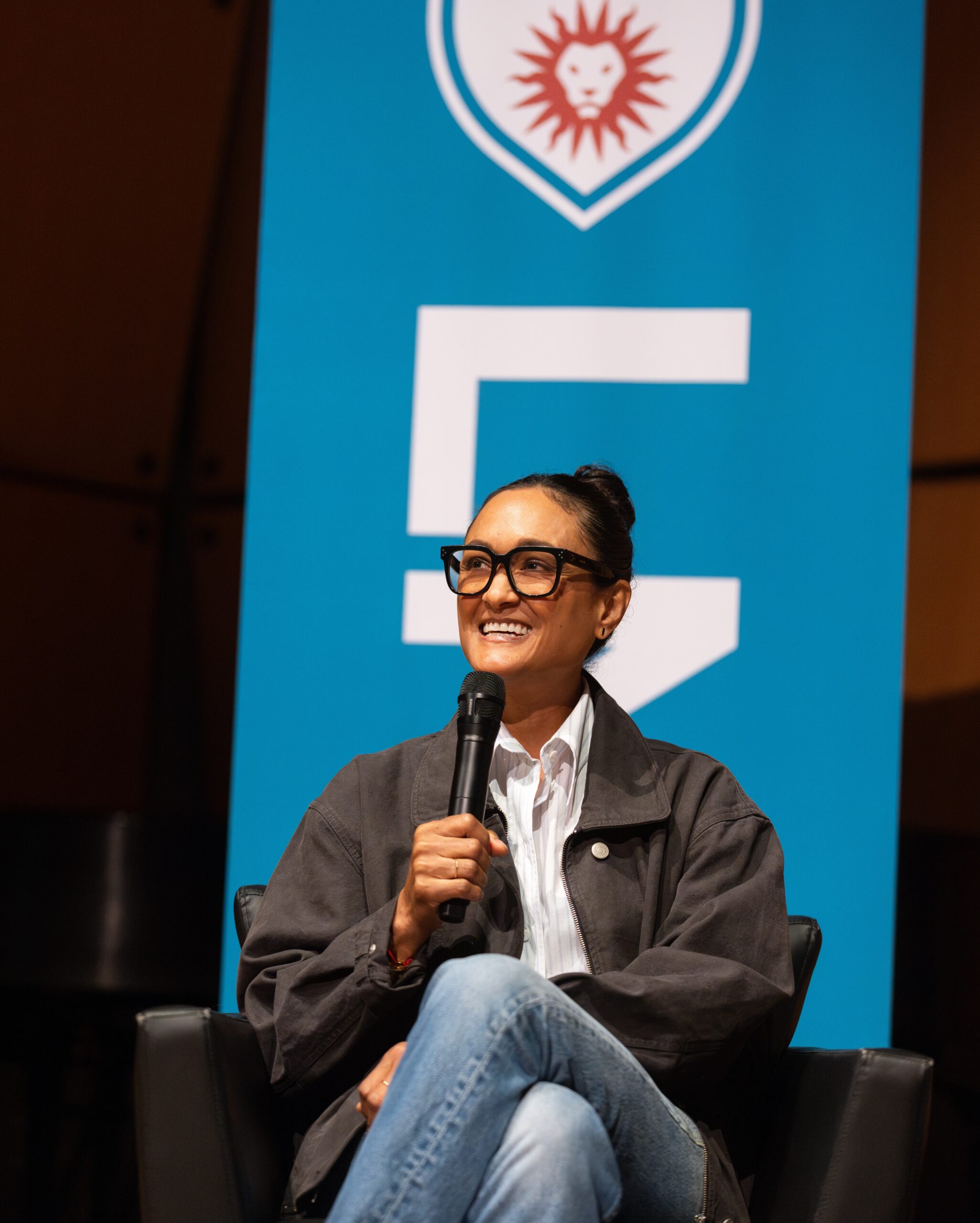
Autumn Durald Arkapaw ’02 began her time at LMU as an art history major with no connections in the film industry. She returned to campus Oct. 1 an Oscar-winning cinematographer as a guest in the LMU College of Communication and Fine Arts “CFA Conversations With …” speaker series.
Durald Arkapaw traced her career back to a single film genres class, “I felt liberated,” she said. “I felt like there was this whole world that I didn’t know about.”
Durald Arkapaw, who had come to LMU for art history with an interest in photography, said she wasn’t familiar with film school, but a single course in film genres showed her how much more went into a movie than is noticed by simply watching it: the story, the characters, the history, and the filmmakers behind it.
In March 2026, Durald Arkapaw became the first woman to win an Academy Award for Best Cinematography for her work on “Sinners.” She was also the first woman of color to be nominated in the category.
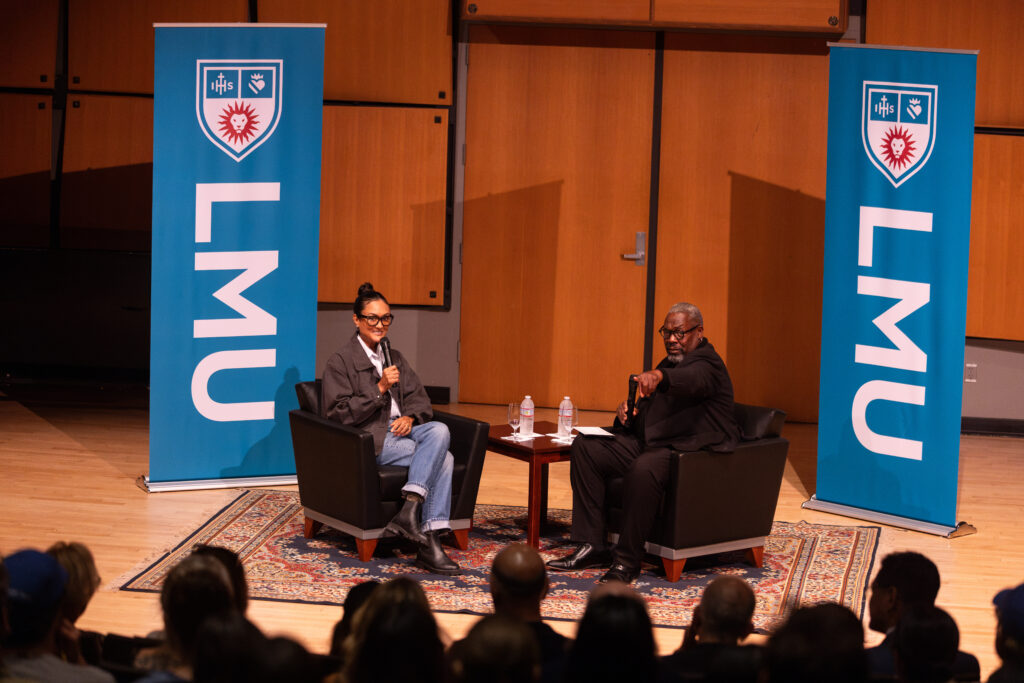
Throughout the conversation, she described how her training in art history at LMU shaped how she builds images, why her work depends on collaboration built on respect, and how her route into the film industry was anything but direct.
Bryant Keith Alexander, CFA dean, said what struck him most was how plainly and honestly Durald Arkapaw described the complex road to winning an Oscar. She spoke of it, he said, as “practical, incremental, unfolding” opportunities rather than a mystery, “which then makes it that much more accessible.”
After graduating in 2002, Durald Arkapaw set her sights on New York, imagining an internship at Sotheby’s and, eventually, a gallery of her own. She didn’t get the internship. She worked at a museum, then took an advertising job “just to make money,” which taught her she didn’t want to be behind a desk.
She saved up, took a cinematography course at UCLA, quit her job, and started working on film sets for free. “It was from like 2002 until 2007, really figuring out how to get into that business,” she said. She later enrolled at the American Film Institute Conservatory, where she earned her Master of Fine Arts degree in cinematography.
Respect, Durald Arkapaw said, is what makes collaboration work.
Art history, Durald Arkapaw said, trained her eye. She made flashcards to memorize dates, painters, and photographers, and she studied composition, framing, and light in museums and photographs. She still draws on that knowledge. For “Sinners,” a photograph from the 1930s served as a reference. She said she has to “know in my gut what that feels like” because “I wasn’t there in the ’30s.” Her goal is for audiences to feel “all of that heat and pain, layers and texture,” for which she said her art history training serves her well.
Respect, she said, is what makes collaboration work. “You are who you surround yourself with,” she told the audience, adding that when artists give “your time and your soul to an artistic project,” the respect “has to be there.” She still works with many of the same friends she has made along the way.
Alexander said many disciplines hold a “rugged individualist” mentality where successful people are perceived to have made it on their own, “when in fact, it’s always and already about relationships and collaboration.”
Durald Arkapaw also spoke about the importance of representation. “You want to see yourself out there reflected, so that you have that confidence to move forward,” she said. She said she now tries to do the same for young women who talk to her about the industry.
Alexander said representation matters “in the midst of an attack on diversity, equity, and inclusion.” He tied it to LMU’s mission — the service of faith and the promotion of justice — adding that each time Durald Arkapaw is credited with a historic first, “it tells us that we are making incremental progress toward what real inclusion looks like and what it feels like.” For students, Durald Arkapaw’s advice was to be mindful of what they say yes to. After graduation, she said, much of the early industry work is done for free, and “every time you say yes, you’re giving who you are to somebody else. Your time, your effort, your soul, everything.”
Sam Molitor ’27 studies journalism and economics at LMU and frequently writes for LMU Marketing, Communications and External Relations.