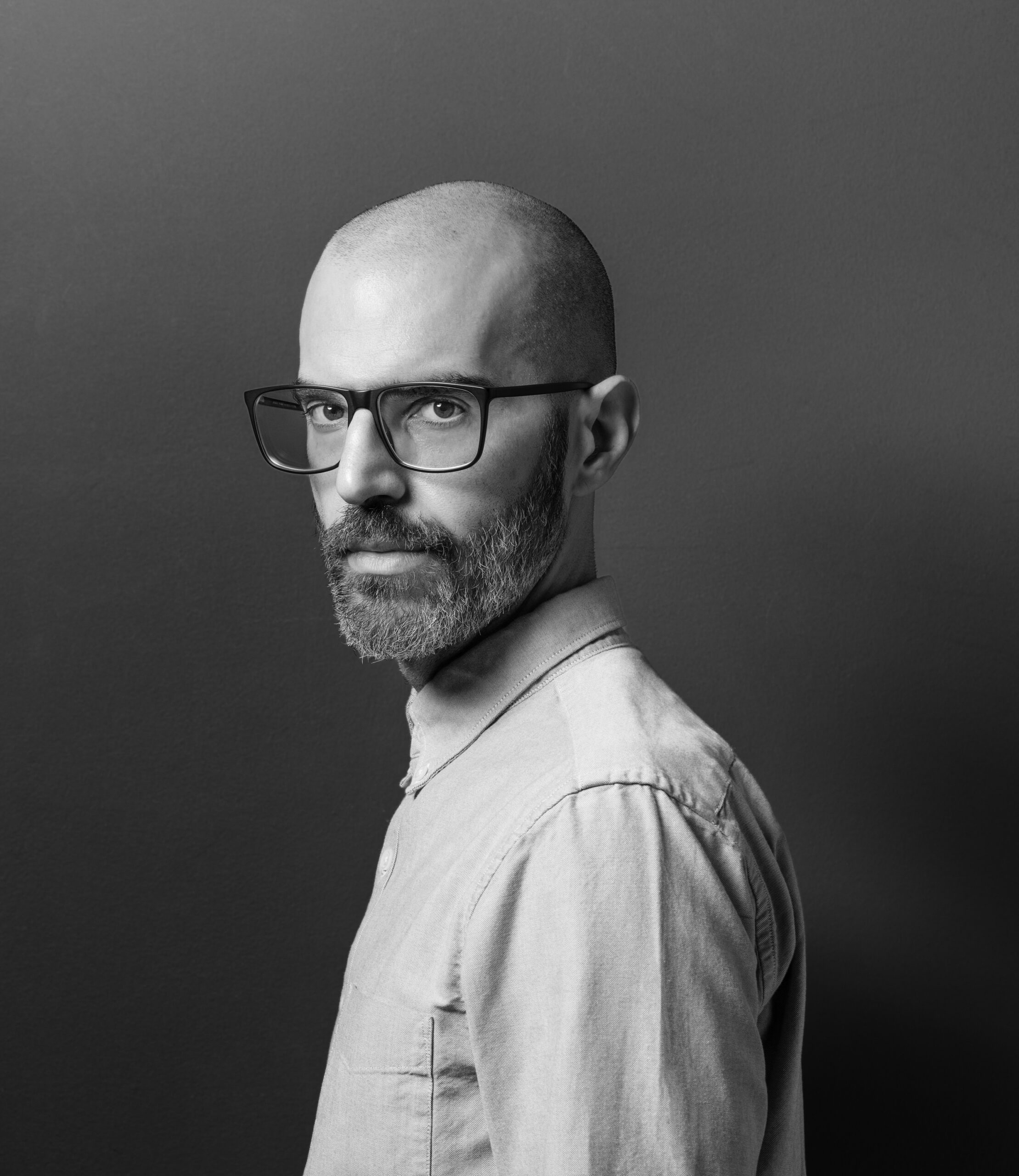
Emiliano Ponzi has been one of our favorite illustrators since before his work first appeared in LMU Magazine in summer 2013 (“Assisi Road,” Vol. 3, No. 3). Since then, he’s Illustrated several more features, including “Looking for Sepulveda” (Vol. 9, No. 1, Spring 2019). Several years back, I wrote an editor’s blog about my regard for his work, which referenced a profile published in Communication Arts. If I were writing my small commentary today, I’d try to find the proper words to express what I see as his empathy, or warmth, for his subjects. You can see those qualities in his illustration for “The Business of Compassion” in this issue. —The Editor
When you attended high school, you received a broad, liberal arts education rather than a specialized arts degree. In many careers, specialization is touted as a secure path to employment. Do you recommend to young artists to do as you did?
Yes, that’s true. In high school, I received a broad education, particularly focused on the humanities and psychology. Later, I attended the European Institute of Design, where I completed a three-year degree in illustration.
Today, perhaps more than ever, I would encourage young artists to focus not only on technical skills, but above all on developing their own way of thinking and their personal taste. I believe it’s essential to cultivate an individual perspective, something that allows you to develop a distinctive voice in a world already full of talented artists. Ultimately, what makes an artist interesting is not just what they can do, but how they see and interpret the world.
You once said, “What I’m saying in my illustration is much more important than how I am saying it.” What does that mean: that people sometimes miss your message because they become enmeshed in dissecting your method?
I prefer to think in terms of tone of voice rather than style. Style is a tool, while tone of voice is what gives an artist a personal and distinctive way of expressing ideas. Ultimately, what matters most is the message we leave with the viewer.
Who do you think is producing important art right now, particularly in the editorial space?
Especially in the age of AI, when so much attention is focused on advertising and collaborations with major international brands, I believe editorial illustration still offers something incredibly valuable: the opportunity to create a small work of art within the limited space of a printed page.
To me, that space still holds enormous creative potential.
On the “Greatest Hits” tab on your website, you’ve posted the illustration “Assisi Road,” which you did for LMU Magazine in 2013. For us, that illustration symbolized the art and design aspirations we had for our magazine. Why do you consider it one of your greatest hits?
Even 13 years later, I still see it as a great example of what makes an illustration truly successful: a strong message communicated through exactly the right visual language.
I imagine you receive more assignment proposals than you can accept. What makes you say yes?
I moved permanently to the United States only four years ago. If I had lived here my whole life, I would probably say, “Because of the money!”
Jokes aside, having plenty of work is obviously important because it allows us to live a more comfortable and peaceful life. But what really excites me about saying yes to new projects is the opportunity to explore completely different worlds. Every illustration means immersing myself in a new universe, discovering different subjects, and learning about topics I might never have explored otherwise. It’s a constant exercise in curiosity, one that keeps my mind stimulated and pushes my imagination in unexpected directions.