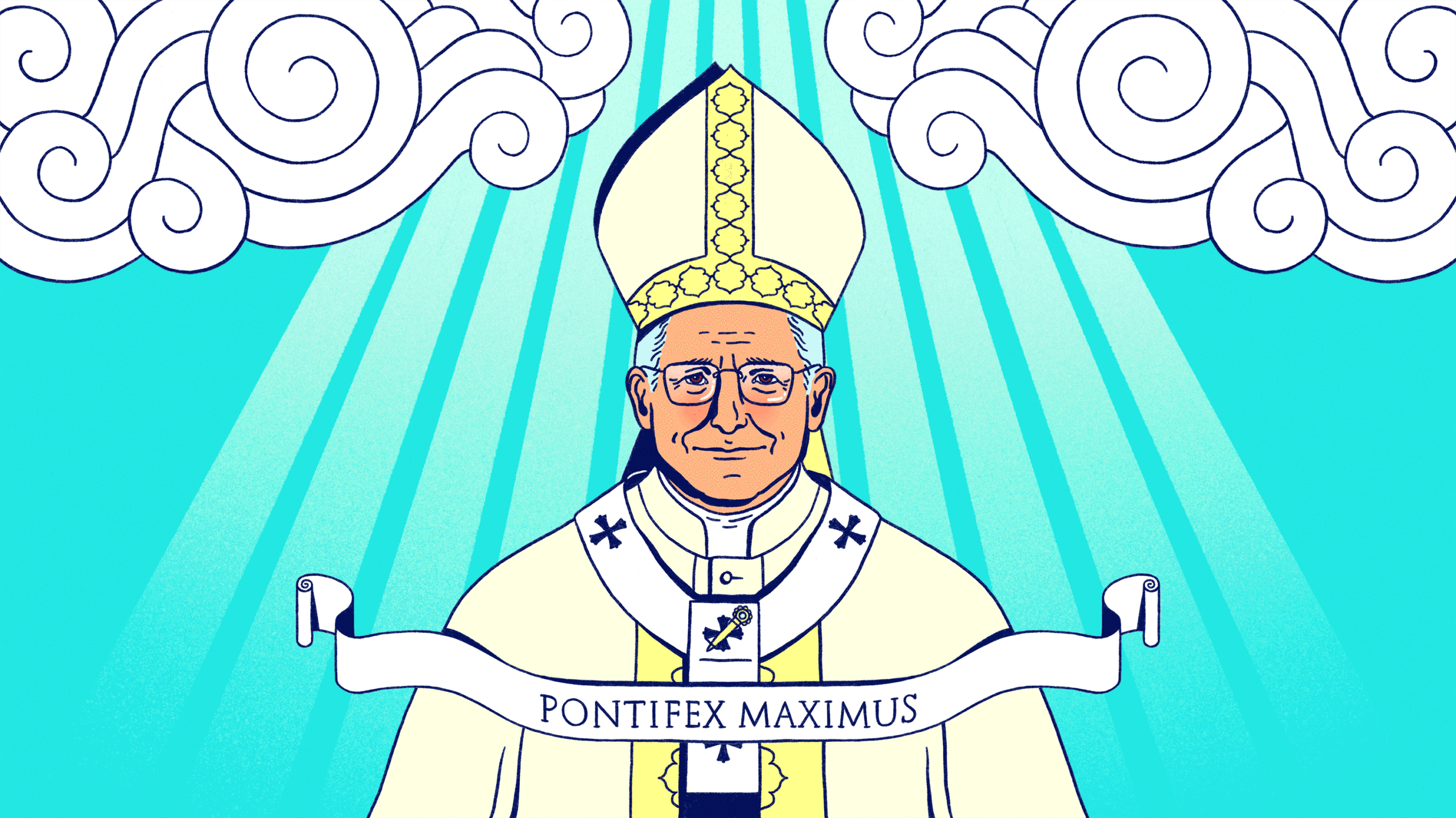
For several years, I’ve wanted to publish a story in LMU Magazine about the Catholic notion of the common good. Looking at the world around me, I’ve believed it’s desperately needed.
During the past decade, the American political environment has become a forum for creating enemies, targeting supposed outsiders, and sowing distrust in institutions and the security of the vote. Not to mention accelerating economic stratification and self-aggrandizement. Maybe add in an ethic of hyper-individualism. Today, the common good, nearly extinct, appears to be seed that long ago was choked by thorns (Matthew 13: 4-9).
A dark view through the lens of a pessimist? I’d say my lens is fairly clear. Consequently, I’ve looked on the common good as an antidote to our ills. So, how to define it? A Vatican rendition describes the common good as the “sum total of social conditions which allow people, either as groups or as individuals, to reach their fulfillment more fully and more easily.”
I wouldn’t have recognized the phrase “the common good” during most of my childhood in an inner-city Catholic parish in Philadelphia. Back then, I might’ve defined the common good by rewriting Cain’s answer to God’s question: “We are, all of us, Abel’s keeper.” Yet, the notion that we share a responsibility to enable the flourishing of others as well as ourselves seeped into me as if it were in the air I breathed.
But how to avoid framing the common good in the language of a master’s-level theology paper? Or fill it with a hundred “shoulds” and a pile of guilt?
In summer 2026, we finally published a feature story about the common good (“Here Lies the Common Good,” by Jim McDermott). Written in plain, accessible language, its appearance in print was something of a personal milestone for me, precisely because it eluded me for several years. Lately, milestone moments like that are on my mind. For nearly 21 years, I’ve been editor of LMU Magazine. This edition is my last.
As the exit door looms, I’m increasingly tempted to reminisce, to muse over metaphorical trophies on the mantlepiece. But my mind is on the future, not the past — on LMU’s future and the role Jesuit, Catholic institutions may play amid our shared social and political conditions.
How to describe that future? Who better to do so than the head of the worldwide Jesuits with oversight of all Jesuit institutions, including universities, Arturo Sosa, S.J.?
In July 2025, Sosa addressed a meeting of Jesuit university leaders in Bogotá, Colombia. He first described the world in which Jesuit universities are thoroughly immersed, a world of distress:
“We face a worrisome weakening of democracy, even in countries with a long democratic tradition. We also recognize the diminishing influence of the international institutions that were created to uphold and advance human rights, social justice and citizen participation in decisions that affect the common good of humanity.”
In May 2026, Pope Leo, in his first encyclical, “Magnifica Humanitas: On Safeguarding the Human Person in the Time of Artificial Intelligence,” amplified those concerns. He placed the development of artificial intelligence within a broader context: the normalization of war, the loss of historical memory, religious extremism, and nihilism. To those dangers he added the inequitable distribution of the benefits of economic growth and the “grave evil” of unemployment.
There’s nothing new in the Catholic Church addressing the needs of the world. Leo’s namesake, Leo XIII, laid a modern foundation for Catholic Social Teaching with “Rerum Novarum,” his 1891 encyclical about the effects of industrialization and the rights of workers. What I find hopeful today is the explicit and unequivocal statement of the role of Jesuit, Catholic universities in the midst of deeply troubling times.
In the face of great challenges, both Leo and Sosa have responded with words of hope. In November 2025, the pope gave an All Saints’ Day homily on the purposes of education. He warned against the darkness of injustice that can darken “constellations of light.” Leo described schools and universities as “laboratories of prophecy, where hope is lived. …” Sosa, in his Bogotá address, described even more clearly where Jesuit universities are called to stand.
“A university of the Society of Jesus is called to discover and interact with the margins of society. … For a Jesuit university, accompanying the young means forming students in hope, helping them to believe that a more just, peaceful, and sustainable world is possible, and encouraging them to play their role in building it.”
One might say the statements are only words, mere ink on paper. The Constitution is nothing but words on paper. But words often give our actions direction. Take the mission of Loyola Marymount University:
• the encouragement of learning
• the education of the whole person
• the service of faith and the promotion of justice
Those words have guided us at LMU Magazine: With every issue, we ask ourselves, “Does this article track back to one or more of those goals?” Those words set our direction.
No words I’ve heard while working at LMU have inspired me more than these, from the late Peg Dolan, R.S.H.M.: “Each of us is a word of God spoken only once. We have a word to speak with our lives, and if we do not speak it, it may never be heard.”