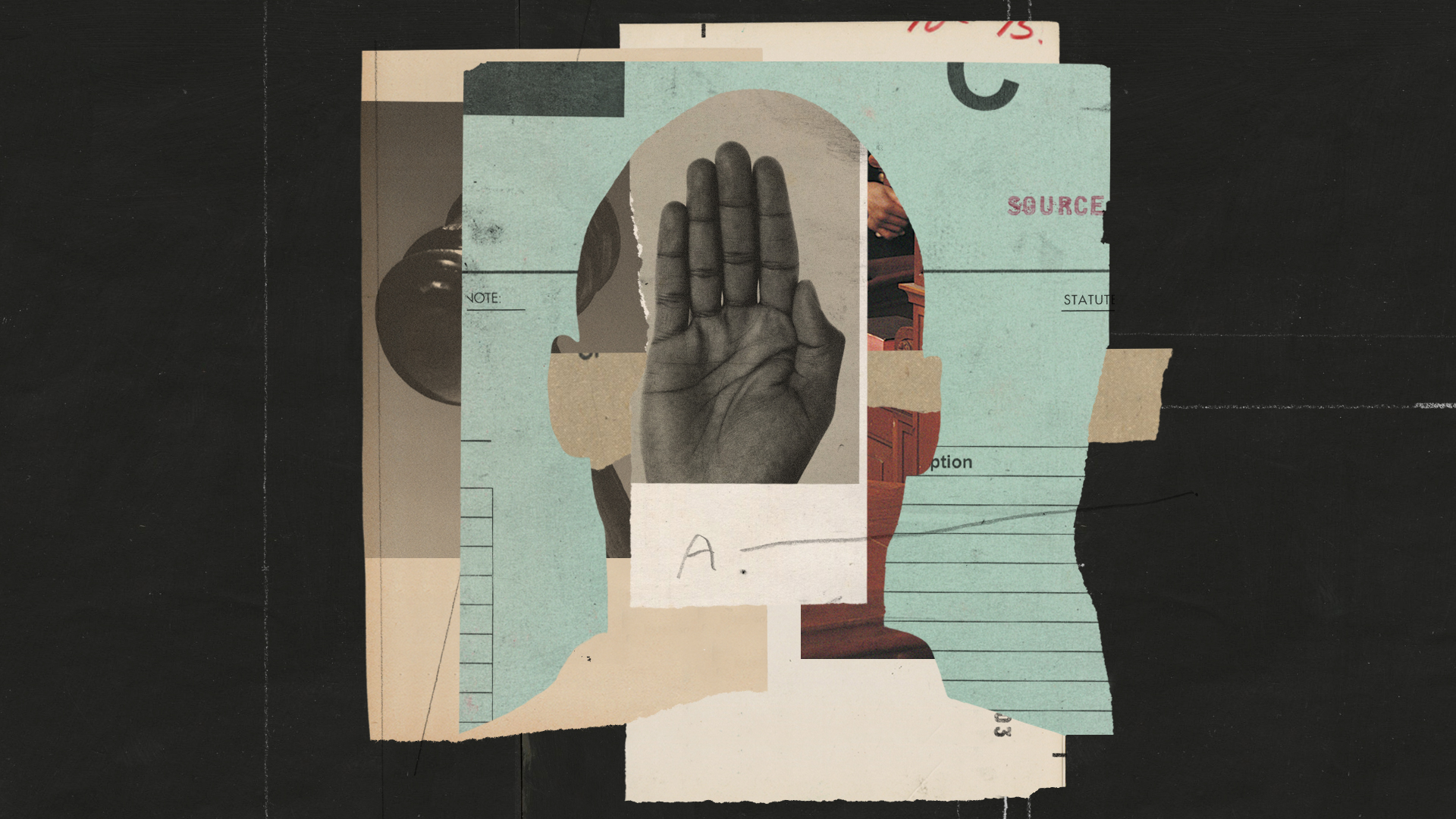
To Sean Kennedy ’86, LLS ’89, there’s no such thing as a gang-entrenched youth.
“If you’re a teenager, you’re entrenched in nothing,” says the former federal public defender who now leads the LMU Loyola Law School’s Center for Juvenile Law and Policy (CJLP). “Giving up on someone who’s 15 is just immoral.”
Yet that’s exactly what California has been doing for nearly 40 years. Enacted in 1988, the Street Terrorism Enforcement and Prevention Act unleashed gang enhancement charges that can add from two years to 15 years to life to a prison sentence if a crime is found to have been committed for the benefit of a street gang.
That determination hinges on expert opinion. And until recently, retired — and sometimes active-duty — police officers held a near monopoly on shaping the courtroom narrative around gang life in California. Relying almost exclusively on the testimony of police veterans tipped the scales heavily toward the prosecution.
“Many scholars view these mega sentences as a fundamental driver of mass incarceration in California,” Kennedy notes.
It’s also a proxy for race. State prison data shows 92 percent of gang enhancements are applied to people of color.
“No one gets more mercy than white teens engaged in what looks like gang-like behavior,” Kennedy says.
When it comes to urban street gangs, however, even if a crime is clearly not gang-related — say, a DUI or domestic violence — law enforcement experts will testify that all crime by gang-involved youths is by definition gang-related.
“Police stick to the party line. It’s a pretty rigid doctrine taught by the California Gang Investigators Association. An echo chamber — just police telling other police what they think about gangs,” Kennedy says. Meanwhile, on the defendant’s side: silence.
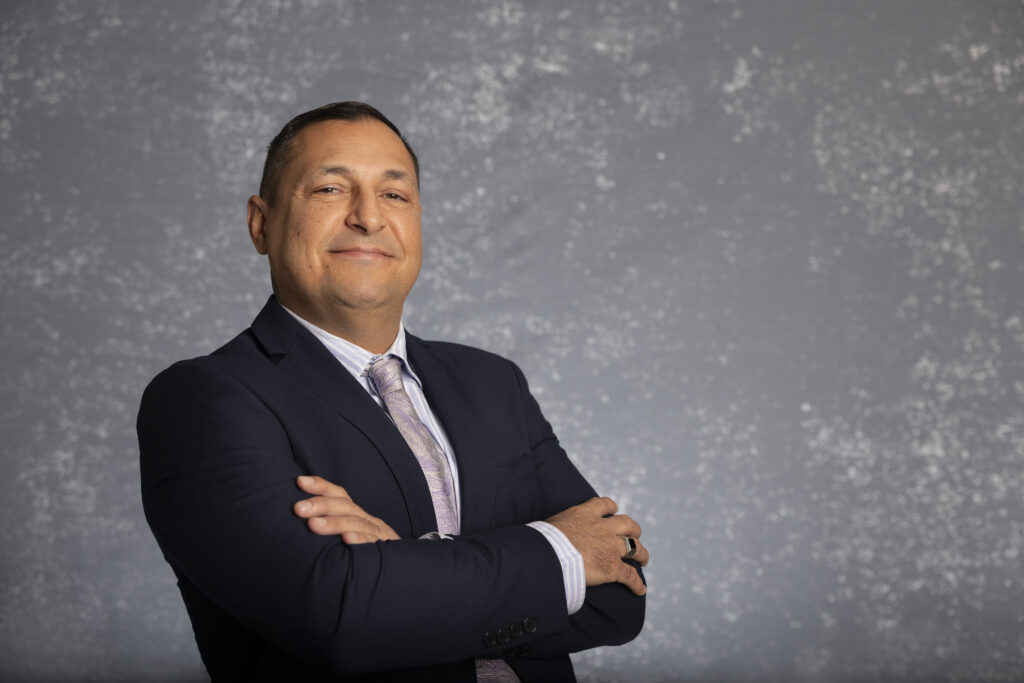
Adam Mortera, once a member of San Diego’s Shelltown gang, joined the 2022 IFEGC cohort. (Photo by Jon Rou)
Going to College
Kennedy founded the Independent Forensic Gang Expert College (IFGEC) in 2020 to change that. The first and only program of its kind, IFGEC trains ex-gang members to testify in court as expert witnesses. Many graduates are former juvenile lifers paroled or pardoned after proving they were fully rehabilitated.
Adam Mortera is one such expert. A former member of San Diego’s Shelltown gang, he was incarcerated at 17 for second-degree murder and spent 22 years in prison. Released in 2013, he got himself court-certified as a forensic gang expert in 2017. Mortera was a unicorn back then — one of only a handful of lived-experience gang experts in California. He joined IFGEC’s 2022 cohort, and the program transformed him from a “raw gang expert into a legally sophisticated one,” he says.
Today, Mortera has welcome competition from some 50 fellow IFGEC alumni.
Kennedy and his CJLP colleagues spend six Saturdays educating each cohort of 15 trainees in California gang law, rules of evidence, and procedure. In mock cross-examinations, Kennedy role-plays a prosecutor, pummeling trainees with tough questions: “What gang were you in? What crimes did you commit? Who committed them with you?”
“They leave that class super stressed-out,” Kennedy says. “These are people who’ve been socialized never to talk about what happened outside the safety of the gang support network.”
Four weeks of intensive coaching follow, with each trainee paired with a CJLP faculty member or staff attorney to hone note-taking, report-writing, and testifying skills. The final exam is a full-blown mock trial, with faculty members presiding as judges and third-year law students playing prosecutors and defenders.
For Kennedy, disrupting the school-to-prison pipeline and showing gang-involved youth a way out is the Holy Grail.
Not every candidate passes. “Those we think are ready, we certify as forensic gang experts. Those we don’t, we offer a chance to do the training again,” Kennedy says. The program ends with an emotional graduation. In March, 15 graduates crossed the stage in business attire purchased for them by LLS. For some, it was the first suit they’d worn since being sentenced to life as a teen.
Breaking the Monopoly
Kennedy has read hundreds of hours of trial transcripts in which public defenders with strong cases lost the gang enhancement battle for lack of a friendly expert witness.
UCLA gang anthropologist Jorja Leap — known as “Little Mama” on the streets — calls the situation “horrendous.”
“If our courts and our justice system are to be fair, we need to have broader representation in experts,” she says.
Leap questions how veterans of gang enforcement units can speak with authority when their knowledge is gleaned from antagonistic street interviews and interrogations. “Why would gang members tell the truth to someone who has the power to arrest them and put them in prison?”
She has no animus toward law enforcement — “I’m married to a retired LAPD deputy chief, and I love my husband.” But, she notes, “it takes a long time to win gang members’ trust.”
Strong defenses against gang enhancement charges do exist, provided a sympathetic expert is in court to validate them. Kennedy points to CJLP’s youngest clients, sometimes not even 12, who turn out to be “posers” — status-seeking wannabes with no real gang affiliation. Some crimes by established members — felonies rooted in personal grudges, romantic disputes, or addiction — are frowned upon by gang leadership. In such cases, a defender backed by a lived-experience expert can block enhancement charges using a “frolic and detour” defense, borrowed from civil tort law, in which an employee is found to have acted outside the scope of work. The tide may be turning. Assembly Bill 333, signed into law in 2021, restricts gang enhancements, requiring direct evidence of active participation rather than mere association. And judges and courts are increasingly willing to appoint lived-experience experts.

Sean Kennedy ’86, LLS ’89, founded the Independent Forensic Gang Expert College at the LMU Loyola Law School in 2022. (Photo by Jon Rou)
Role Modeling a Gang Exit
Perhaps the greatest value such experts bring to the defense team is as a role model to their young clients. They deliver a message Kennedy, a self-described “white man in a striped tie who’s never been in a gang,” never credibly could. They’re living proof that a future exists outside the gang.
Kids don’t choose gangs, Kennedy explains. They’re pushed into them by conditions such as untreated trauma, poverty, or violence in the home.
He’s thinking about kids like Ryan. Abandoned in a crack house at 2, bounced between dysfunctional relatives and the child welfare system, the San Fernando Valley teen was 15 when the carceral system came crashing down on him. Labeled “gang entrenched,” he faced a possible life sentence for attempted murder.
Kennedy and his student-advocates won Ryan’s release, but the triumph was short-lived. Ryan returned to the only support network he’d ever known. A few weeks later, Ryan was killed in a gunfight.
When kids go back, “they’re just repeating what they know, because chaos feels like security and protection,” Kennedy says. “Ryan was a really decent kid.” A more “holistic kind of legal representation” might have saved him.
Kennedy despises the term “gang banger,” and bristles at the idea of applying the label “hardcore” to teenagers. He reserves it for middle-aged members of the Aryan Brotherhood or the Mexican Mafia, some of whom he also has represented in federal courts.
But there’s a Hollywood-fueled myth that gang membership is “blood in, blood out” — entry into the gang requires shedding someone’s blood; to leave requires shedding some of one’s own. The truth: Membership typically begins between ages 12 and 15 and lasts only a couple of years. Gang exit correlates strongly with finishing high school, and earning a college degree in prison pushes gang-related recidivism to almost zero.
For Kennedy, disrupting the school-to-prison pipeline and showing gang-involved youth a way out is the Holy Grail.
Once Mortera completed the IFGEC training, his phone started ringing off the hook. With fellow graduates he formed Juvenile Justice Advocates of California, a consulting practice specializing in expert witness services and transfer hearings (used to determine a juvenile offender’s fitness to stand trial as an adult). He has logged more than 800 hours on 80 felony cases, at hourly rates running from $125 to $300.
State prison data shows 92 percent of gang enhancements are applied to people of color.
Off the clock, Mortera connects gang-involved clients with rehabilitative programs and coaches them on in-custody conduct. “If I didn’t mentor them, a lot of these youths would have remained in survival mode, fighting rules violations,” he says.
An Ignatian Agenda
The 50 gang experts IFGEC has certified to date aren’t nearly enough. Kennedy regularly fields calls from public defenders in Chicago, Miami, and New York seeking experts he can’t supply.
“I teach California gang law and California procedure. We can’t serve other jurisdictions,” he says.
Kennedy would like IFGEC to become a template for similar programs at other law schools. He pitches the concept at meetings of administrators and faculty members of Jesuit colleges and universities, such as the Association of Jesuit Colleges and Universities.
No takers yet, but “I am not dissuaded,” he says, smiling. “I feel indefatigable.”
A double LMU alumnus, Kennedy credits IFGEC’s Ignatian ethos with LMU’s willingness to fund an expensive, controversial program.
“There is a dimension of the law that tramples over the weak and the poor,” he says, “and this institution reminds us that the law should seek justice, not just easy answers.”
The program’s Ignatian ethos extends beyond the courthouse walls. There also is a special grace in doing the work of the experts.
That’s the word one IFGEC graduate used after testifying as an expert witness in the very courthouse where, decades before, he’d been sentenced to life for a gang homicide. “The last time he entered in there, he was ‘padded up’ (indicted on inflated charges) and angry,” Kennedy says. Testifying that day felt like “a second chance to master his experience and change the narrative for someone else. It’s that concept, over and over, that’s so powerful.”
Diane Krieger, a frequent contributor to LMU Magazine, is a Los Angeles-based freelance writer whose work has appeared in publications from Tufts University, Johns Hopkins University, Caltech, and The Idaho Statesman. Her article titled “Math Values” appeared in the winter 2026 issue of LMU Magazine.